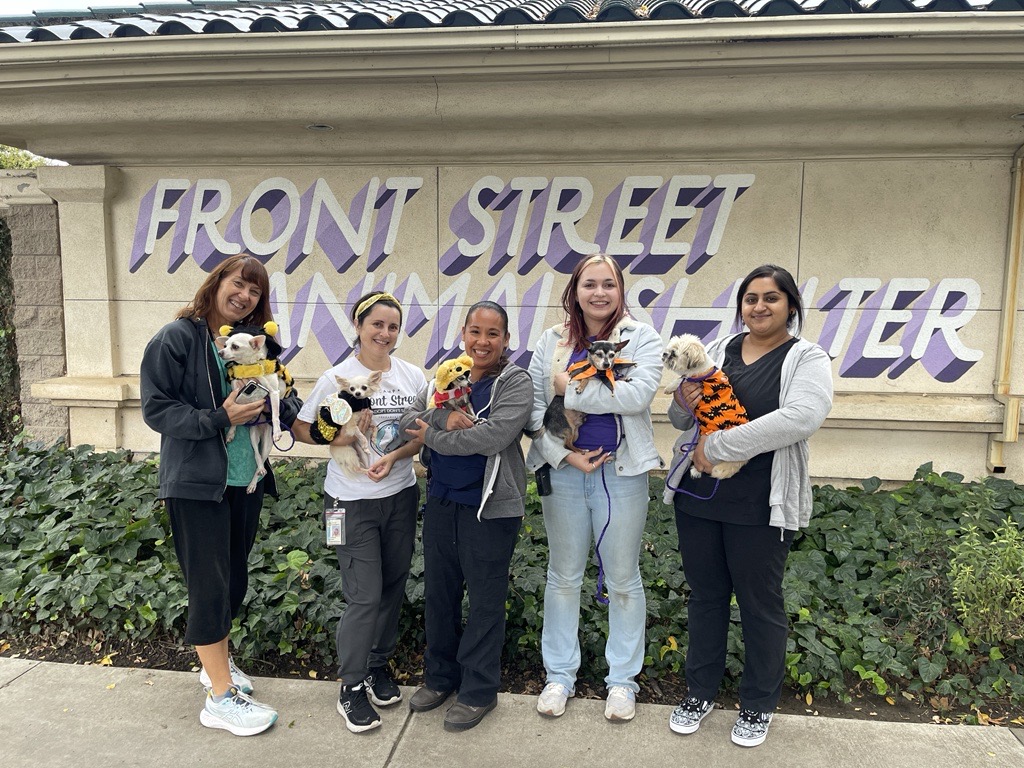
The City’s Front Street Animal Shelter saw more than 9,000 animals in the past year, an increase of almost 20% from 2022, as detailed in its 2023 Annual Report released by the shelter’s Animal Care team.
According to the report, and similar to other shelters across the country, Front Street has seen a shortage of veterinarians and staff, which can make caring for animals in need more difficult as animal intake has risen in the past years.
Despite these challenges, Animal Care and its volunteers still save thousands of lives each year while providing vital services outside the shelter’s walls. Notable statistics include:
- 5,252 animals adopted
- 2,871 animals sent to foster homes
- 1,481 returned to home
- More than 1,000 active volunteers donated 95,000 hours of their time to the animals and community
- 5,052 animals received vaccines and/or a microchip at one of the community clinics
- 3,038 spay/neuter surgeries
“Our staff, volunteers, donors, grantors, elected officials, City leadership and our community members all play a part,” said Phillip Zimmerman, animal care services manager. “In animal wellbeing, there will never be enough time and resources, but that doesn’t stop all of us from trying to do the best we can.”
Unhoused-owner services
In addition, the Homeless Outreach and Assistance Program (HOAP) provided care to 1,363 pets of unhoused owners this past year.
HOAP was developed in May 2022 to address the tremendous need for pet-related services among unsheltered residents in Sacramento. Because of the connections the team is making, 208 animals were spayed/neutered and 3,528 treatments were administered, which includes vaccines, flea prevention, deworming, and lab work.
“If it wasn’t for this program, the homeless community would lose their animals that provide emotional support,” said Bree, a HOAP client. “A lot of times they save our lives–they’re our light and our reason for getting up.”
Visit Animal Care Services online to learn more about adoptions, fostering, volunteering, donating and more to be a part of making a difference in the many lives coming through the shelter and its programs.
Editor’s note: The article was revised to account for a change in the year-over-year percentage increase caused by an inconsistency in types of animals compared between years, which has been updated.