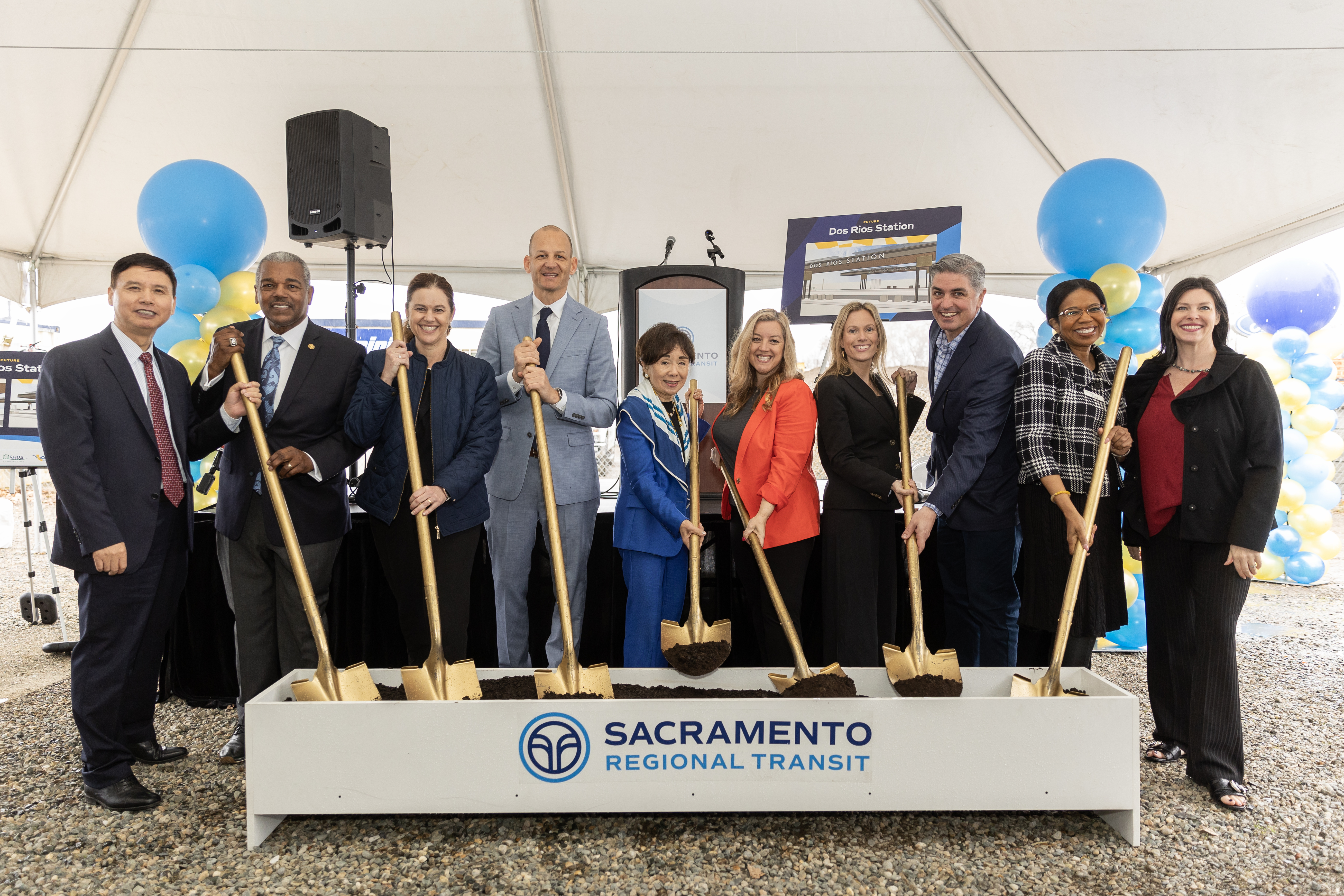
Sacramento leaders and community members recently joined the Sacramento Regional Transit District (SacRT) in a groundbreaking ceremony celebrating the future Dos Rios Station on the Blue Line.
The project brought together local, state, and federal leaders who have contributed to this milestone in transit planning. The new station will serve as a key transportation link for the growing River District and the Mirasol Village housing community, improving access and connectivity in the area.
“The Dos Rios station is more than just a new stop on the Blue Line,” said Mayor Kevin McCarty. “It’s a vital connection for the River District—improving access to jobs, housing, and services. We’re building community, sustainability, and economic growth and equity.”
“This project is about more than just adding a new station—it’s about ensuring residents have access to jobs, education, healthcare, and essential services,” said City Councilmember Rick Jennings, who represents District 7 and serves as chair of the SacRT board. “I’m proud that SacRT is advancing projects that prioritize equity and mobility, while ensuring safe travel. I look forward to seeing this station serve the community for years to come.”
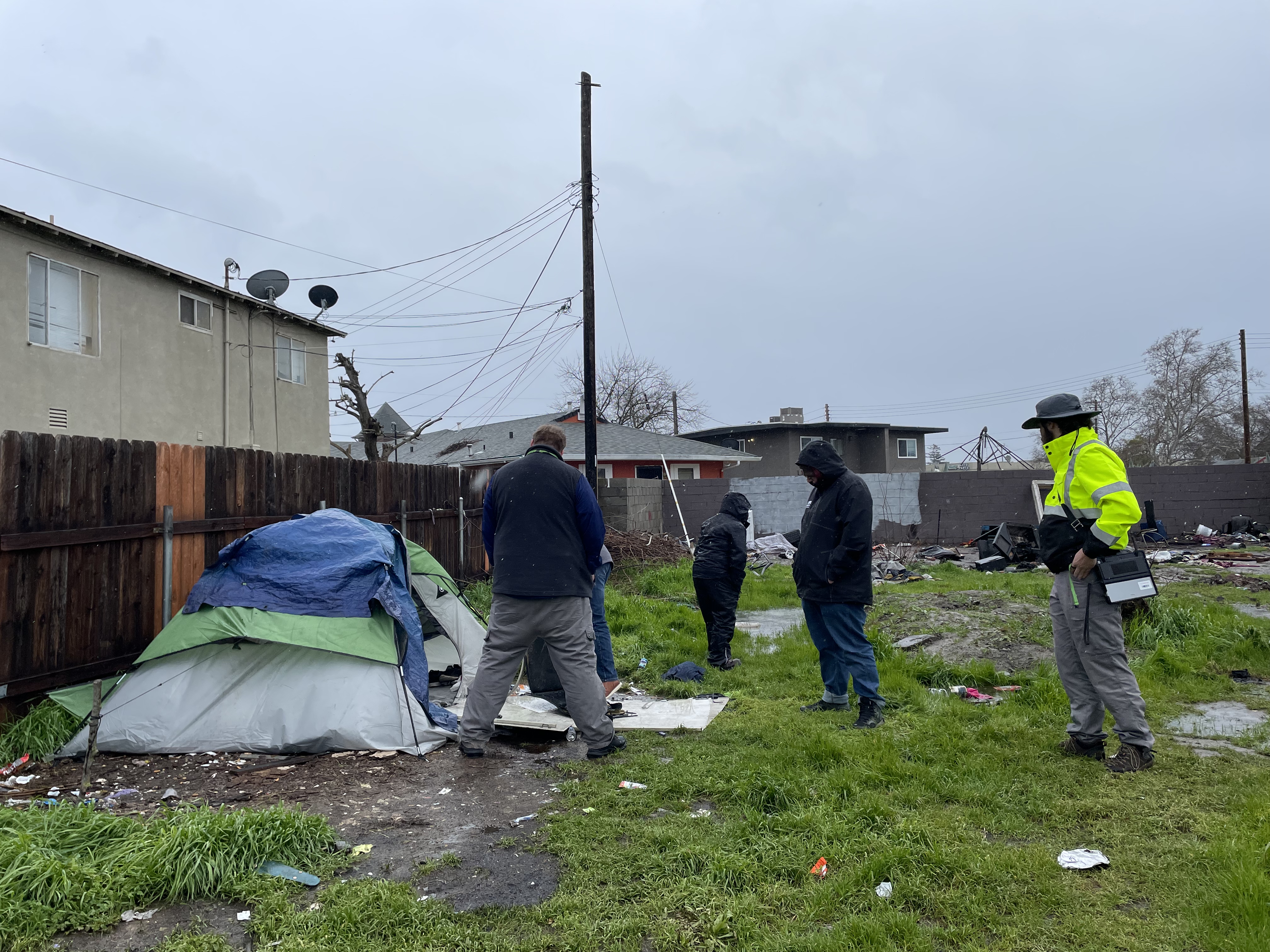
Due to the area’s industrial history, the site required extensive environmental remediation before development. The U.S. Environmental Protection Agency (EPA) awarded the Sacramento Housing and Redevelopment Agency (SHRA) a $350,000 Brownfields Cleanup Grant to initiate the process. The City also contributed $1.1 million in Community Development Block Grant funding from the U.S. Department of Housing and Urban Development, along with $330,000 from its EPA Brownfield Revolving Loan Fund Program. These funds helped remediate the future light rail site and ensure worker safety during construction.
With site preparation work already underway, major construction will begin this summer, and the station is expected to open by the end of 2026.
The project is funded through a combination of sources, including $17.6 million from the Transformative Climate Communities Program, $10 million in Senate Bill 125 funds, $2.5 million from the Transit and Intercity Rail Capital Program Cycle 7, and a $1 million Congressional Directed Spending Request secured by Congresswoman Doris Matsui. Additionally, a $9.5 million grant from the U.S. Department of Transportation’s Rebuilding American Infrastructure with Sustainability and Equity Program completed the necessary financing for the $43 million station.
Once complete, this historically isolated area will have improved connections to transit, employment centers, services, retail, and cultural amenities, enhancing accessibility to downtown Sacramento.
About the Mirasol Village Redevelopment Project
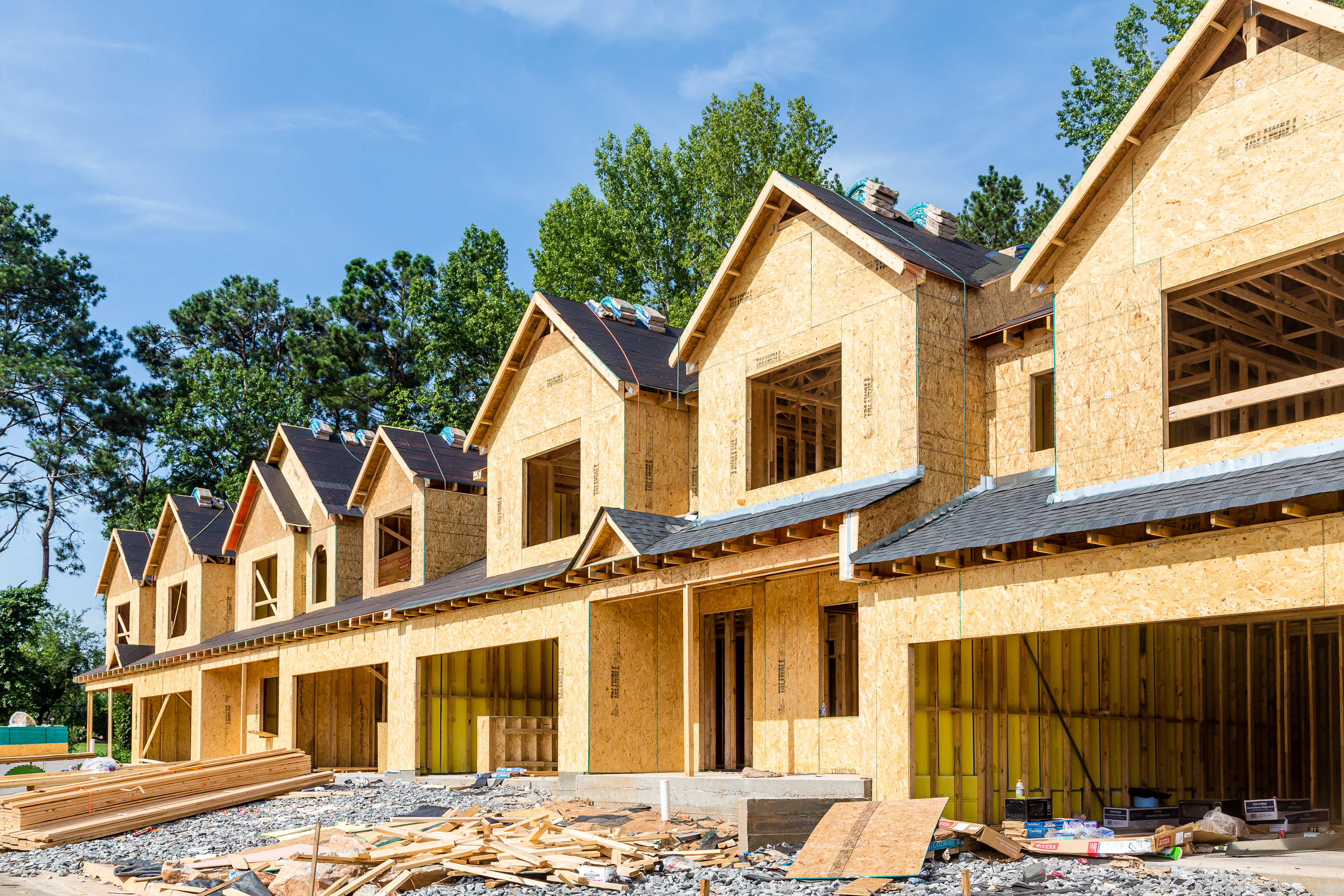
The Dos Rios Station will provide a transportation option for Mirasol Village, a 427-unit mixed income housing community redeveloped by SHRA. Formerly known as Twin Rivers/Dos Rios, the community was transformed with the support of a $30 million Choice Neighborhoods Initiatives Implementation Grant from the U.S. Department of Housing and Urban Development, $20 million in City funding, $5 million in County funding, $52 million in state funding, and over $120 million in private funding. As part of a broader revitalization effort, Mirasol Village includes a 1.2-acre City park, community garden, and an early childhood education center.
Portions of funding allocated to the development were dedicated to neighborhood improvements. The City implemented these improvements through projects such as improved pedestrian facilities, the North 12th Street cycle track, North 12th Street murals, the River District Park, Matsui Park access improvements, River District gateway art sculptures, and wayfinding signage.