The Sacramento City Council recently added four properties to the Sacramento Register of Historic and Cultural Resources, recognizing buildings that reflect the City’s architectural history and the development of its neighborhoods.
The newly designated landmarks include three residences and the former El Dorado School. The properties represent Queen Anne, Spanish Revival, Tudor Revival and Colonial Revival architecture dating from 1901 to 1941.
“Each of these properties reflects a distinct part of Sacramento’s architectural and neighborhood history,” said the City’s Preservation Director Sean de Courcy. “Listing them on the Sacramento Register formally recognizes their significance and helps guide future changes in a way that respects their historic character.”
The four properties are:
3137 33rd Street
Constructed in 1901, the Oak Park residence is associated with the neighborhood’s early development as Sacramento’s first streetcar suburb and the working-class and immigrant families who helped establish the community.
The house is a surviving example of a working-class Queen Anne residence. Its defining features include a steeply pitched front-facing gable, decorative truss, asymmetrical design and bay window.

5241 J Street (Former El Dorado School)
The former El Dorado School opened in 1921 as part of the Sacramento school district’s school construction program of the 1920s.
The Spanish Revival building features a clay tile roof, textured stucco exterior, arched entrances, a main façade arcade and an ornamental bell tower. Architect James Dean designed the main school building, and his brother, Charles F. Dean, designed the attached auditorium. Both were prominent Sacramento architects.
The school closed in 1974 but retains much of its historic appearance and architectural character.

1957 13th Avenue
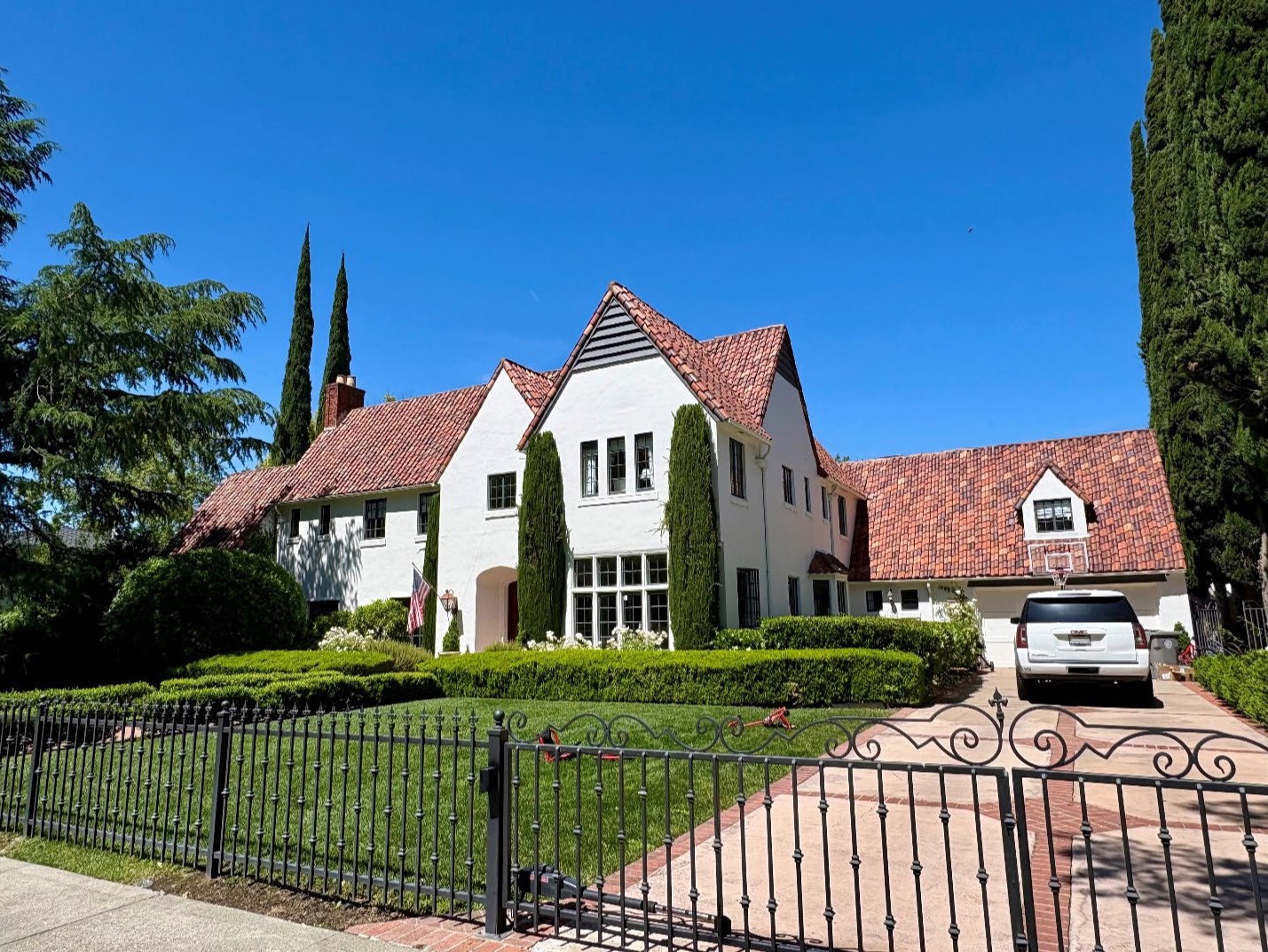
The 1928 residence is distinguished by its Tudor Revival design, including steeply pitched gabled roofs, multi-pane windows, an arched entrance, a prominent chimney and an asymmetrical layout.
The house has undergone few exterior alterations and retains most of the features associated with its original design.

1445 45th Street
Constructed in 1941, the East Sacramento residence reflects the Colonial Revival architectural style. Its defining features include an unpainted brick exterior, decorative brickwork, an arched front entrance, metal divided-light windows, decorative brackets and brick chimneys.
The residence has changed little since its construction and retains a high degree of historic integrity.

How properties receive landmark designation
The owners of the three residences commissioned historic evaluations of their properties in 2025. Preservation Sacramento and East Sacramento Preservation commissioned the evaluation of the former El Dorado School, nominated it to the National Register of Historic Places and asked the City to consider it for local landmark designation.
City staff reviewed the evaluations and determined that each property met the criteria for landmark designation. The Preservation Commission then reviewed the nominations and recommended approval by the City Council.
Listing a property on the Sacramento Register formally recognizes its historic or architectural significance. Future development proposals and exterior alterations are reviewed to ensure historically significant features are considered, though the designation does not prohibit changes or require a property to remain unchanged.
Listed properties also become eligible for the City’s Mills Act program, a preservation incentive which can reduce property taxes for owners who agree to preserve and maintain their historic properties.